
| Click here to read about how to present a "Good Lesson" |
| Click here to read about how to present a "Good Lesson" |
So… What do you know about the monumentally important work of Jacob Kounin? 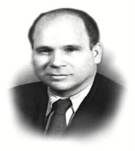
You’re among the fortunate few if you say “Quite a bit.” If you're in the dark on this one, read on.
Some of the keys to effective management of student behavior are:
1. Devising comprehensive systems
2. Consistently reinforcing well-practiced routines and procedures, and
3. Packing our professional bags full of positive and respectful preventive strategies and reactive interventions.
Another important component doesn’t get very much attention…
4. The way in which we present and conduct our lessons.
Being a ‘grey beard’ in the profession, I was privy to the “new stuff” that was being written “back in the day”. I was immersed in the now-aged, but still essential writings of Haim Ginott, Fritz Redl, Thomas Gordon, and Rudolf Driekurs. Another “old head” pioneer in our profession was Jacob Kounin. He is best known for the research investigations that he conducted during the 1970s and 1980s. He wrote about how one’s teaching style has a positive or detrimental effect on behavior in the classroom. You'll see his ideas embedded in the recommended strategies of modern writers of classroom management texts. Rarely is he given the credit for the ideas.
Dr. Kounin recognized the connection between the actions of the teacher while teaching, and student behavior. He believed that effective teaching and effective classroom management is established through the mastery of the following five areas: withitness, overlapping, movement management, smoothness, and group focus. Additionally, he purported that classroom organization, planning, proactive interventions, and student involvement were essential to a well-run, productive classroom.
Preventive (versus Reactive) Discipline
Withitness – The teacher should be aware of what is happening in the classroom at all times. S/he needs to have “eyes in the back of the head.”.
“It is not necessary to know what the teacher knows is going on – it is what the students believe she knows.” (Kounin, 1981)
Overlapping – This word pertains to the ability to do many things at the same time (i.e., “multi-tasking”). 
Kounin stated that this ability is closely related to being “with-it” (see above). In his mind, they worked hand-in-hand to produce a powerful effect.
One without the other reduces the teacher’s effectiveness (Kounin, 1988).
 Movement Management – This term refers to the pace of a lesson. The momentum should be consistent, monitored, and adjusted in order to prevent slow-downs and stoppages. The pace of the lesson should be modulated so that it keeps the attention of the students.
Because s/he is prepared, the teacher knows what s/he will do next in the lesson, what the students will be doing next, and facilitates smooth transitions between parts of the lesson. Unexpected happenings and interruptions are handled quickly and smoothly so that the lesson flows well, and keeps students attentive and on-task.
Smoothness – Smoothness refers to the teacher’s ability to keep the classroom running in an organized fashion. Teaching a lesson while maintaining the students focus, transitioning from one subject to the next without losing the students or having a lot of disruption. Orchestrating the events, procedures, and movement/traffic patterns are factors in development of a well-managed classroom. It is important to avoid “flip-flops” and “dangles” (see below).
Group Focus – Group focus is the ability to keep all students actively participating in a lesson. Teachers can do this by having class discussion, calling on students unannounced (choose these students wisely), and asking questions just to name a few. More suggestions will be provided in the upcoming BehaviorAdvisor.com web page.
Proficient Classroom Management Avoids:
Dangling - “Dangles” occur when a teacher leaves a topic without having finalized it, provides a summation, or otherwise drawn the lesson to a full conclusion. If a lesson is important enough to teach, it is important enough to finish. To avoid dangles, teachers work on proficient planning and the timeliness of their lesson presentation. They should not be surprised by the time on the clock: “Oh my! It’s almost time to go to lunch. Clean up quickly and line up at the door.” (Additionally, this teacher better have a practiced and ingrained procedure for “cleaning up” and “lining up at the door”, or the madness that is about to ensue from the dangle will be magnified exponentially.)
Nearly all "rules" about managing behavior have exceptions. A few that don't include: Always do what is in the students best interests; Always treat youngsters with respect; and Build and maintain positive interpersonal bonds with kids. Here's an exception to Dr. Kounin's admonition to avoid "dangling": (From Dr. Mac's facebook page) At the conclusion of the day's lesson create a "hook" to spur interest in the next day's lesson. This practice leaves the pupils eager to learn more about the topic tomorrow. It makes it much easier to gain student attention and transitio...n into the next lesson on the following day. While Jacob Kounin warns against “dangling” (leaving a topic unfinished), we don’t always need to reach an endpoint in a lesson. We can decide to "dangle" in a planned manner, such as when we stop a video before the climax or impacting point. The kids plead and beg you to re-engage the video, but you say "That's the first thing we'll do tomorrow. Be on time, and be attentive so that we can begin promptly".
.
 Flip-Flopping - A “flip-flop” is somewhat like a “dangle”. It occurs when a teacher is teaching a lesson on one topic, but then inserts unrelated material from a previous lesson. This act destroys student concentration, and they are now confused as to where to focus their attention. Once a lesson has been concluded, and another one begun, avoid reminiscing back to previous material (except to relate the earlier material directly to this new subject matter in order to facilitate comprehension). Teachers should avoid leaving a topic on which the students are focused in order to introduce unrelated material.
Thrust - Thrusting occurs when teachers fail to give clear, well-worded directions when group attention was upon them. Non-descript directives result in student confusion, complaints, multiple questions as to what to do, conversations with other students, refusals to work, and so forth. Teachers then find themselves answering the same question multiple times, having to address misbehavior, and pulling students who did comprehend off-task. Directions for giving directions is the topic of a future podcast on BehaviorAdvisor.com
 Becoming "Stimulus-Bound"- Teachers who allow themselves to be distracted by outside stimuli, move the class’ attention to that distraction. The students are now off-task, have trouble re-engaging in the task, and engage in misbehavior. Teachers also become bound up in the wrong focus when they draw student attention away from the lesson to make spontaneous announcements (“Oh…Remember that field trip permission slips are due tomorrow.” Or “Mr. Lee! Before Ms. T. goes to the deli, please tell her to order a vegemite sandwich for me.” {Non-Australians: Conduct an internet search for the term… Oops, did I just get stimulus bound again?}), or attend to non-essential conversations with other teachers who walk into the room.
Secretaries and administrators often create a “stimulus bond” situation school-wide by allowing announcements to be made over speakers while classes are in session. (I found that pulling the wire out from the back of the speaker worked particularly well in solving this problem.) We now know from cognitive research that when the mind is pulled off of its focus, it takes about 10 minutes to fully re-engage in that topic.
Certainly, some distractions are unavoidable. In those cases, the teacher needs practiced routines (Teacher says “1-2-3. Attention on me.” and kids follow with “1-2. Attention on you.”, Students repeating a couple of clapping sequences modeled by the teacher before s/he gives a precision direction as to what students should now do) in order to refocus the youngsters back task.
There is so much more to say about these important points, and I will do so in a future BehaviorAdvisor.com web page. But right now, let me “dangle”.
__________________________________________________________
Here are some ways to engage youngsters in your lessons. Rate your proficiency on each item on a 0-3 scale. Set the professional goal of obtaining a higher score when you complete the checklist again in a couple of weeks.
___My "do now" activity (something the kids start working on the as soon as they enter the room) is designed to help kids prepare for my upcoming lesson.
| Click here for more info on using a "Do Now" to get kids to settle down at the beginning of class |
___My lessons start promptly. I do not answer questions unrelated to the lesson. Students are told that
they can ask that question AFTER the lesson.
___My lessons open with an interesting item, activity, question, or statement.
___I am dynamic and entertaining in my presentations. If my students are going
to be excited about learning, I have to be excited about teaching.
___I make use of instructional variety by changing the manner of presentation
often (media, guest speaker, group work, computer).
___Activities are challenging and enjoyable.
___My students realize that they are learning and making progress.
___I keep the momentum of my lessons moving ahead.
___I keep students attentive and involved.
-mentioning that "someone" will be asked a question "on this" soon
(group alerting)
-involving kids in discussion and demonstration
-everyone holds up a card with the answer to your question written on it
-everyone writes an answer before youngsters are selected at random to read
(the teacher circulates to observe the answers of non-reciters)
-challenging the students
-"You're really going to have to pay attention to even think about this one."
-"I'm betting that no one can figure this one out, but anyone want to try?"
___I catch kids being good...A LOT!!!!!
-"That's using your noggin."
-"Thoughtful answer."
-"Thanks for volunteering to attempt a really difficult question."
-"That's a good start to our complex answer. Who can build on Amy's
contribution?"
___I avoid:
-focusing on one student for too long
-choosing a particular student to answer before asking the question
___I get rid of distractions from the lesson.
-loudspeaker announcements (Organize tenured teachers to complain to administration)
- intruders who "just want to make a quick announcement" (I tell them to return later)
-little reminders that interrupt students' concentration while they work
-"Remember to place your name and date at the top of the paper."
-"Remember that each paragraph must contain a topic sentence."
___When "drill" is necessary, I engage the students in fast-paced, high-energy
activities with high success rates.
___If I use competition, students never compete against other students. They compete
in groups or against a standard.
___I make sure that I bring closure to the lesson, rather than stopping abruptly.
-quick review
-have kids tell three important points covered in the lesson
___I prepare my students for the transition to the next task/class.
-"We'll be looking into community relations in our next period. You'll need
to have a pencil, notebook and textbook on your desk to be ready."
-"Next up, we'll be discussing how the women's movement has changed
society. In the next few minutes, discuss with your tablemates how sports,
jobs, politics, and other areas have been influenced. I'll expect each table to
be able to contribute four points to our discussion."
.gif)
.gif)
.
| Click here to see how the ideas of Jacob Kounin were placed into practice in one classroom |
| Click here for a list of ideas for regaining kids' attention when it wanes |

| Fetch Dr. Mac's Home Page |
Author: Tom McIntyre DoctorMac@Behavioradvisor.com